


Misting technology, also known as the technology of spraying tiny water drops, has become one of the most efficient solutions for a wide range of industrial applications. It is used in environments where temperature control, humidity regulation, and air quality are essential for maintaining safety and optimizing production efficiency.
In this study, we will explore how misting technology works, its advantages in industrial environments, and its applications across various sectors — from production facilities to warehouses and factories.
Principles of Misting Operation
Misting technology is based on the generation of fine water drops, dispersed through specialized nozzles. This process taking advantage of physical principles, such as evaporation and thermodynamics, to lower air temperature and improve humidity conditions.
There are two basic types of misting systems:
- Low-pressure systems: These are simplest and typically used for large outdoor areas. However, ANDRIANOS does not recommend low-pressure misting systems due to their lower efficiency and reliability.
- High-pressure systems: These systems produce smaller drops and are ideal for indoor environments where precise environmental control is critical. We exclusively recommend and guarantee the quality and reliable operation of high-pressure misting systems.
Depending on the specific needs of each industry, misting systems may also include high-efficiency pumps, sensors for temperature and humidity monitoring, and filtration units to ensure the delivery of clean water.
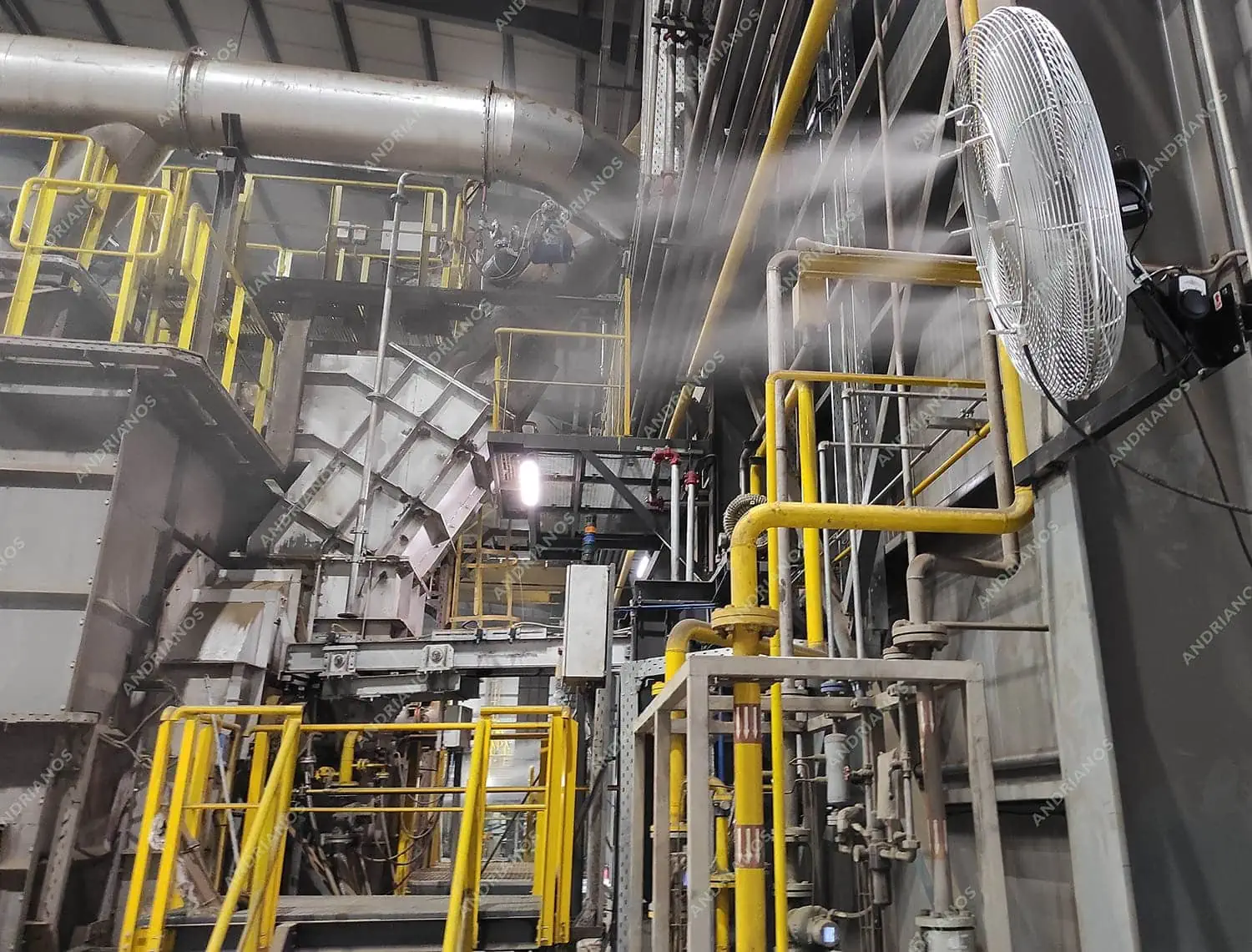
Industrial Misting System in a Battery Manufacturing Plant
Technical Specifications & Design Requirements
The performance of a misting system depends on the quality and characteristics of the water used, the operating pressure, and the materials selected for the system’s construction.
- Water Supply & Purity: Clean water is essential to prevent nozzle clogging. In many industrial applications, filters are required to remove salts and impurities, along with water softeners to minimize mineral buildup.
- Operating Pressure: Misting systems require high pressure to generate fine droplets (typically between 70 and 100 bar). Therefore, the use of high-efficiency pumps is critical.
- Construction Materials: The selection of pipes, nozzles, and pumps directly affects the system’s performance and durability. All materials must be corrosion- and wear-resistant, with stainless steel systems offering the highest reliability.
- Automation & Sensors: Modern misting systems incorporate sensors that automatically adjust pressure, water supply, and environmental conditions, enhancing system performance and optimizing energy consumption. ANDRIANOS offers a complete range of sensors tailored to all misting applications.
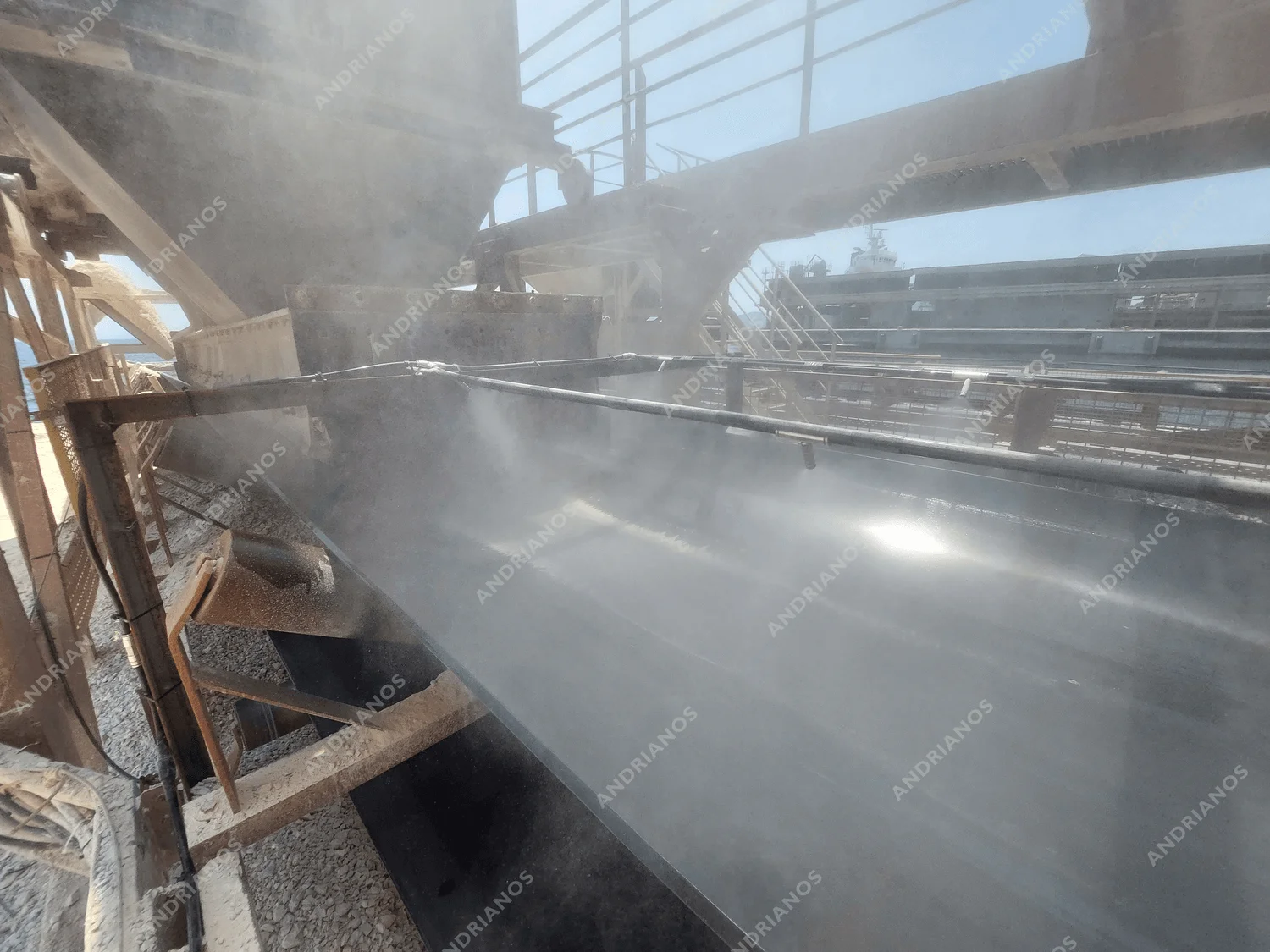
Industrial Misting System for Dust Suppression in a Cement Plant
Advantages of Misting Systems in Industrial Environments
The use of misting systems offers multiple advantages for industrial facilities. Below are some of the most important benefits:
- Thermal Management & Energy Savings: The evaporation of water helps lower ambient temperatures, reducing the need for traditional cooling technologies such as air conditioning. This leads to significant energy savings and operational cost reduction.
- Dust and Particulate Control: Misting creates a fine fog that captures airborne dust particles, reducing air pollution and protecting workers’ health.
- Humidity Regulation for Process Stability: In the production of food, chemicals, or other sensitive products (e.g., wine), maintaining consistent humidity levels is essential to prevent spoilage and improve product quality.
- Improved Workplace Comfort & Safety: Misting systems help create a more comfortable environment by lowering temperatures and minimizing dry air. This contributes positively to worker well-being and productivity.
Application Sectors
Misting technology is used across a wide range of industrial sectors, including:
- Production Facilities: For temperature and humidity control during manufacturing or storage.
- Food Packaging & Cold Storage Units: Ideal for maintaining the specific conditions required for safe food storage and processing.
- Wood, Paper & Textile Industries: Helps regulate humidity to prevent cracking and enhance product quality.
- Ports, Construction Sites & Raw Material Industries: Commonly used for dust suppression and improving the working environment.
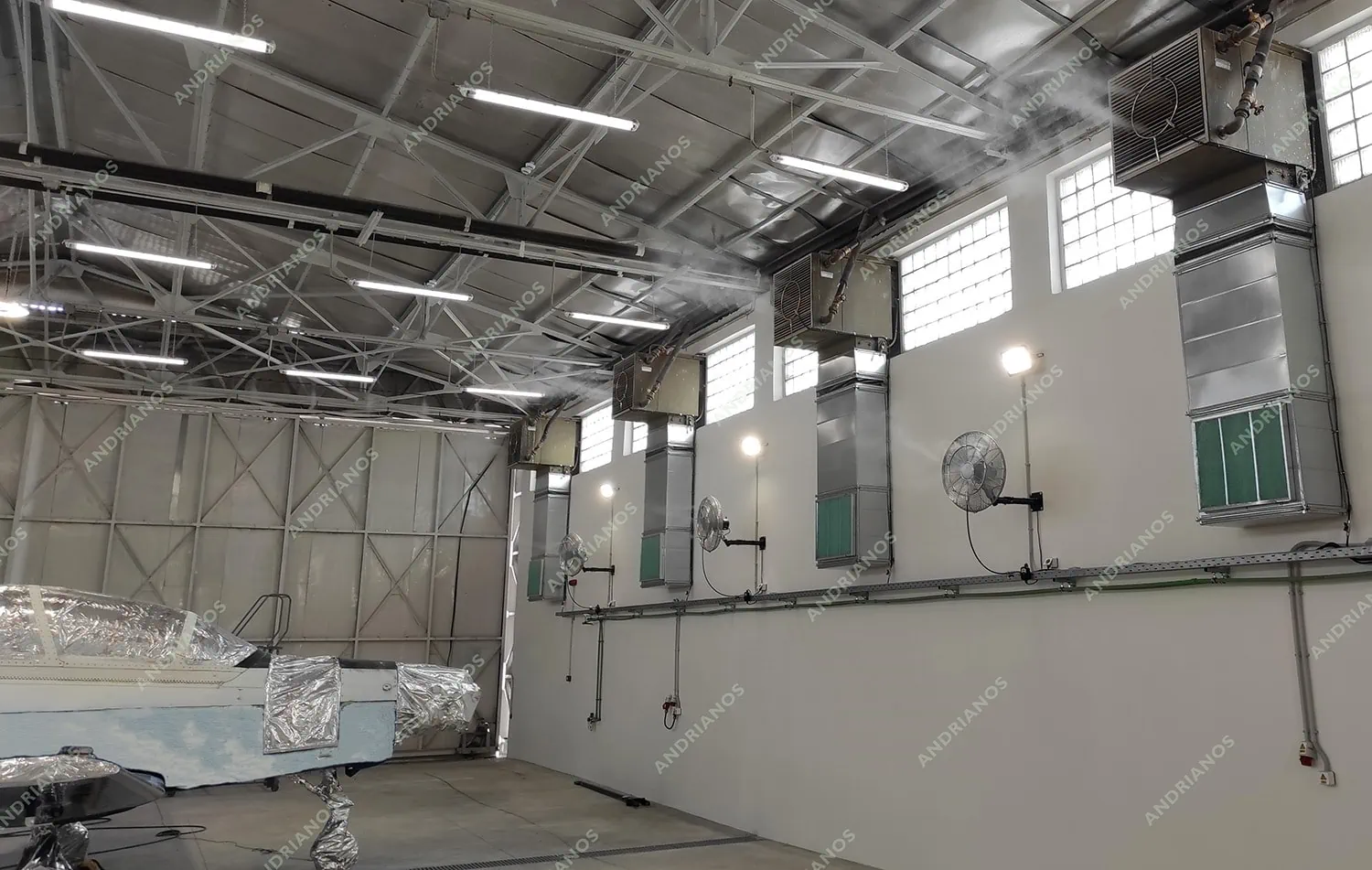
Dust Suppression and Space Cooling in an Industrial Facility
Cost and Efficiency of Industrial Misting Systems
Installing an industrial misting system involves an initial investment; however, the long-term benefits are substantial. Operating costs remain relatively low compared to other cooling methods, and the reduced need for conventional HVAC technologies (such as air conditioning systems) leads to significant energy savings and lower operational expenses.
The return on investment (ROI) can often be achieved quickly, thanks to reduced energy costs and increased workforce productivity.
Common Mistakes & Best Practices
Although misting technology is highly effective, there are common mistakes that can compromise its performance, including:
- Inadequate or incorrect design of the hydraulic system and ventilation.
- Use of poor-quality water, leading to nozzle clogging and reduced system lifespan.
- Under-sizing or over-sizing the system, resulting in low efficiency or unnecessary water and energy consumption.
For optimal performance, it is recommended that the design and sizing of misting systems be carried out by a certified mechanical engineer. Installation should be performed by trained and certified technicians to ensure reliable and efficient operation.
Conclusions on Industrial Misting Systems
Industrial misting is an efficient and strategic solution for managing temperature, humidity, and air quality across a wide range of applications. Its multiple benefits—from energy savings and improved working conditions to worker health protection and product quality assurance—make it an essential component of modern industrial infrastructure.
For more information and a personalized application study for your facility, please contact our team.